Algorithmic mechanism design (AMD) lies at the intersection of economic game theory, optimization, and computer science. The prototypical problem in mechanism design is to design a system for multiple self-interested participants, such that the participants' self-interested actions at equilibrium lead to good system performance. Typical objectives studied include revenue maximization and social welfare maximization. Algorithmic mechanism design differs from classical economic mechanism design in several respects. It typically employs the analytic tools of theoretical computer science, such as worst case analysis and approximation ratios, in contrast to classical mechanism design in economics which often makes distributional assumptions about the agents. It also considers computational constraints to be of central importance: mechanisms that cannot be efficiently implemented in polynomial time are not considered to be viable solutions to a mechanism design problem. This often, for example, rules out the classic economic mechanism, the Vickrey–Clarke–Groves auction. == History == Noam Nisan and Amir Ronen first coined "Algorithmic mechanism design" in a research paper published in 1999.
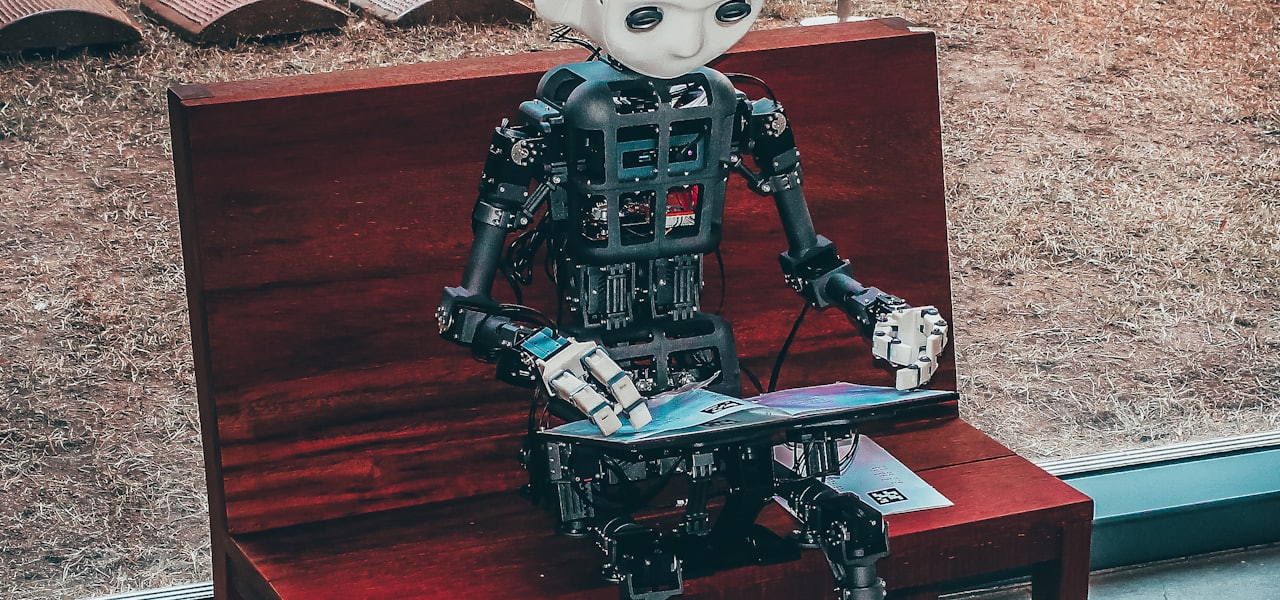
Artificial brain
An artificial brain (or artificial mind) is software and hardware with cognitive abilities similar to those of the animal or human brain. Research investigating "artificial brains" and brain emulation plays three important roles in science: An ongoing attempt by neuroscientists to understand how the human brain works, known as cognitive neuroscience. A thought experiment in the philosophy of artificial intelligence, demonstrating that it is possible, at least in theory, to create a machine that has all the capabilities of a human being. A long-term project to create machines exhibiting behavior comparable to those of animals with complex central nervous system such as mammals and most particularly humans. The ultimate goal of creating a machine exhibiting human-like behavior or intelligence is sometimes called strong AI. An example of the first objective is the project reported by Aston University in Birmingham, England where researchers are using biological cells to create "neurospheres" (small clusters of neurons) in order to develop new treatments for diseases including Alzheimer's, motor neurone and Parkinson's disease. The second objective is a reply to arguments such as John Searle's Chinese room argument, Hubert Dreyfus's critique of AI or Roger Penrose's argument in The Emperor's New Mind. These critics argued that there are aspects of human consciousness or expertise that can not be simulated by machines. One reply to their arguments is that the biological processes inside the brain can be simulated to any degree of accuracy. This reply was made as early as 1950, by Alan Turing in his classic paper "Computing Machinery and Intelligence". The third objective is generally called artificial general intelligence by researchers. However, Ray Kurzweil prefers the term "strong AI". In his book The Singularity is Near, he focuses on whole brain emulation using conventional computing machines as an approach to implementing artificial brains, and claims (on grounds of computer power continuing an exponential growth trend) that this could be done by 2025. Henry Markram, director of the Blue Brain project (which is attempting brain emulation), made a similar claim (2020) at the Oxford TED conference in 2009. == Approaches to brain simulation == W. Ross Ashby's pioneering work in cybernetics provided an early mathematical framework for understanding adaptive brain-like systems. In his 1952 book Design for a Brain, Ashby proposed that the brain could be modeled as an ultrastable system that maintains equilibrium through continuous adaptation to environmental perturbations. His approach used differential equations and state-space models to describe how neural systems could exhibit purposeful behavior through feedback mechanisms. Ashby's homeostat, a physical machine built in 1948, demonstrated these principles through an electromechanical device with four interconnected units that automatically adjusted their parameters to maintain stability when disturbed. The homeostat represented one of the first attempts to build an artificial system exhibiting brain-like adaptive behavior, influencing subsequent work in adaptive systems, neural networks, and artificial intelligence. Although direct human brain emulation using artificial neural networks on a high-performance computing engine is a commonly discussed approach, there are other approaches. An alternative artificial brain implementation could be based on Holographic Neural Technology (HNeT) non linear phase coherence/decoherence principles. The analogy has been made to quantum processes through the core synaptic algorithm which has strong similarities to the quantum mechanical wave equation. EvBrain is a form of evolutionary software that can evolve "brainlike" neural networks, such as the network immediately behind the retina. In November 2008, IBM received a US$4.9 million grant from the Pentagon for research into creating intelligent computers. The Blue Brain project is being conducted with the assistance of IBM in Lausanne. The project is based on the premise that it is possible to artificially link the neurons "in the computer" by placing thirty million synapses in their proper three-dimensional position. Some proponents of strong AI speculated in 2009 that computers in connection with Blue Brain and Soul Catcher may exceed human intellectual capacity by around 2015, and that it is likely that we will be able to download the human brain at some time around 2050. While Blue Brain is able to represent complex neural connections on the large scale, the project does not achieve the link between brain activity and behaviors executed by the brain. In 2012, project Spaun (Semantic Pointer Architecture Unified Network) attempted to model multiple parts of the human brain through large-scale representations of neural connections that generate complex behaviors in addition to mapping. Spaun's design recreates elements of human brain anatomy. The model, consisting of approximately 2.5 million neurons, includes features of the visual and motor cortices, GABAergic and dopaminergic connections, the ventral tegmental area (VTA), substantia nigra, and others. The design allows for several functions in response to eight tasks, using visual inputs of typed or handwritten characters and outputs carried out by a mechanical arm. Spaun's functions include copying a drawing, recognizing images, and counting. There are good reasons to believe that, regardless of implementation strategy, the predictions of realising artificial brains in the near future are optimistic. In particular brains (including the human brain) and cognition are not currently well understood, and the scale of computation required is unknown. Another near term limitation is that all current approaches for brain simulation require orders of magnitude larger power consumption compared with a human brain. The human brain consumes about 20 W of power, whereas current supercomputers may use as much as 1 MW—i.e., an order of 100,000 more. == Artificial brain thought experiment == Some critics of brain simulation believe that it is simpler to create general intelligent action directly without imitating nature. Some commentators have used the analogy that early attempts to construct flying machines modeled them after birds, but that modern aircraft do not look like birds.
Extremal Ensemble Learning
Extremal Ensemble Learning (EEL) is a machine learning algorithmic paradigm for graph partitioning. EEL creates an ensemble of partitions and then uses information contained in the ensemble to find new and improved partitions. The ensemble evolves and learns how to form improved partitions through extremal updating procedure. The final solution is found by achieving consensus among its member partitions about what the optimal partition is. == Reduced-Network Extremal Ensemble Learning (RenEEL) == A particular implementation of the EEL paradigm is the Reduced-Network Extremal Ensemble Learning (RenEEL) scheme for partitioning a graph. RenEEL uses consensus across many partitions in an ensemble to create a reduced network that can be efficiently analyzed to find more accurate partitions. These better quality partitions are subsequently used to update the ensemble. An algorithm that utilizes the RenEEL scheme is currently the best algorithm for finding the graph partition with maximum modularity, which is an NP-hard problem.
Iris flower data set
The Iris flower data set or Fisher's Iris data set is a multivariate data set used and made famous by the British statistician and biologist Ronald Fisher in his 1936 paper The use of multiple measurements in taxonomic problems as an example of linear discriminant analysis. It is sometimes called Anderson's Iris data set because Edgar Anderson collected the data to quantify the morphologic variation of Iris flowers of three related species. Two of the three species were collected in the Gaspé Peninsula "all from the same pasture, and picked on the same day and measured at the same time by the same person with the same apparatus". The data set consists of 50 samples from each of three species of Iris (Iris setosa, Iris virginica and Iris versicolor). Four features were measured from each sample: the length and the width of the sepals and petals, in centimeters. Based on the combination of these four features, Fisher developed a linear discriminant model to distinguish each species. Fisher's paper was published in the Annals of Eugenics (today the Annals of Human Genetics). == Use of the data set == Originally used as an example data set on which Fisher's linear discriminant analysis was applied, it became a typical test case for many statistical classification techniques in machine learning such as support vector machines. The use of this data set in cluster analysis however is not common, since the data set only contains two clusters with rather obvious separation. One of the clusters contains Iris setosa, while the other cluster contains both Iris virginica and Iris versicolor and is not separable without the species information Fisher used. This makes the data set a good example to explain the difference between supervised and unsupervised techniques in data mining: Fisher's linear discriminant model can only be obtained when the object species are known: class labels and clusters are not necessarily the same. Nevertheless, all three species of Iris are separable in the projection on the nonlinear and branching principal component. The data set is approximated by the closest tree with some penalty for the excessive number of nodes, bending and stretching. Then the so-called "metro map" is constructed. The data points are projected into the closest node. For each node the pie diagram of the projected points is prepared. The area of the pie is proportional to the number of the projected points. It is clear from the diagram (left) that the absolute majority of the samples of the different Iris species belong to the different nodes. Only a small fraction of Iris-virginica is mixed with Iris-versicolor (the mixed blue-green nodes in the diagram). Therefore, the three species of Iris (Iris setosa, Iris virginica and Iris versicolor) are separable by the unsupervising procedures of nonlinear principal component analysis. To discriminate them, it is sufficient just to select the corresponding nodes on the principal tree. == Data set == The data set contains a set of 150 records under five attributes: sepal length, sepal width, petal length, petal width and species. The iris data set is widely used as a beginner's data set for machine learning purposes. The data set is included in R base and Python in the machine learning library scikit-learn, so that users can access it without having to find a source for it. Several versions of the data set have been published. === R code illustrating usage === The example R code shown below reproduce the scatterplot displayed at the top of this article: === Python code illustrating usage === This code gives:
Linear discriminant analysis
Linear discriminant analysis (LDA), normal discriminant analysis (NDA), canonical variates analysis (CVA), or discriminant function analysis is a generalization of Fisher's linear discriminant, a method used in statistics and other fields, to find a linear combination of features that characterizes or separates two or more classes of objects or events. The resulting combination may be used as a linear classifier, or, more commonly, for dimensionality reduction before later classification. LDA is closely related to analysis of variance (ANOVA) and regression analysis, which also attempt to express one dependent variable as a linear combination of other features or measurements. However, ANOVA uses categorical independent variables and a continuous dependent variable, whereas discriminant analysis has continuous independent variables and a categorical dependent variable (i.e. the class label). Logistic regression and probit regression are more similar to LDA than ANOVA is, as they also explain a categorical variable by the values of continuous independent variables. These other methods are preferable in applications where it is not reasonable to assume that the independent variables have a normal distribution, which is a fundamental assumption of the LDA method. LDA is also closely related to principal component analysis (PCA) and factor analysis in that they both look for linear combinations of variables which best explain the data. LDA explicitly attempts to model the difference between the classes of data. PCA, in contrast, does not take into account any difference in class, and factor analysis builds the feature combinations based on similarities rather than differences. Discriminant analysis is also different from factor analysis in that it is not an interdependence technique: a distinction between independent variables and dependent variables (also called criterion variables) must be made. LDA works when the measurements made on independent variables for each observation are continuous quantities. When dealing with categorical independent variables, the equivalent technique is discriminant correspondence analysis. Discriminant analysis is used when groups are known a priori (unlike in cluster analysis). Each case must have a score on one or more quantitative predictor measures, and a score on a group measure. In simple terms, discriminant function analysis is classification - the act of distributing things into groups, classes or categories of the same type. == History == The original dichotomous discriminant analysis was developed by Sir Ronald Fisher in 1936. It is different from an ANOVA or MANOVA, which is used to predict one (ANOVA) or multiple (MANOVA) continuous dependent variables by one or more independent categorical variables. Discriminant function analysis is useful in determining whether a set of variables is effective in predicting category membership. == LDA for two classes == Consider a set of observations x → {\displaystyle {\vec {x}}} (also called features, attributes, variables or measurements) for each sample of an object or event with known class y {\displaystyle y} . This set of samples is called the training set in a supervised learning context. The classification problem is then to find a good predictor for the class y {\displaystyle y} of any sample of the same distribution (not necessarily from the training set) given only an observation x → {\displaystyle {\vec {x}}} . LDA approaches the problem by assuming that the conditional probability density functions p ( x → | y = 0 ) {\displaystyle p({\vec {x}}|y=0)} and p ( x → | y = 1 ) {\displaystyle p({\vec {x}}|y=1)} are both the normal distribution with mean and covariance parameters ( μ → 0 , Σ 0 ) {\displaystyle \left({\vec {\mu }}_{0},\Sigma _{0}\right)} and ( μ → 1 , Σ 1 ) {\displaystyle \left({\vec {\mu }}_{1},\Sigma _{1}\right)} , respectively. Under this assumption, the Bayes-optimal solution is to predict points as being from the second class if the log of the likelihood ratios is bigger than some threshold T, so that: 1 2 ( x → − μ → 0 ) T Σ 0 − 1 ( x → − μ → 0 ) + 1 2 ln | Σ 0 | − 1 2 ( x → − μ → 1 ) T Σ 1 − 1 ( x → − μ → 1 ) − 1 2 ln | Σ 1 | > T {\displaystyle {\frac {1}{2}}({\vec {x}}-{\vec {\mu }}_{0})^{\mathrm {T} }\Sigma _{0}^{-1}({\vec {x}}-{\vec {\mu }}_{0})+{\frac {1}{2}}\ln |\Sigma _{0}|-{\frac {1}{2}}({\vec {x}}-{\vec {\mu }}_{1})^{\mathrm {T} }\Sigma _{1}^{-1}({\vec {x}}-{\vec {\mu }}_{1})-{\frac {1}{2}}\ln |\Sigma _{1}|\ >\ T} Without any further assumptions, the resulting classifier is referred to as quadratic discriminant analysis (QDA). LDA instead makes the additional simplifying homoscedasticity assumption (i.e. that the class covariances are identical, so Σ 0 = Σ 1 = Σ {\displaystyle \Sigma _{0}=\Sigma _{1}=\Sigma } ) and that the covariances have full rank. In this case, several terms cancel: x → T Σ 0 − 1 x → = x → T Σ 1 − 1 x → {\displaystyle {\vec {x}}^{\mathrm {T} }\Sigma _{0}^{-1}{\vec {x}}={\vec {x}}^{\mathrm {T} }\Sigma _{1}^{-1}{\vec {x}}} x → T Σ i − 1 μ → i = μ → i T Σ i − 1 x → {\displaystyle {\vec {x}}^{\mathrm {T} }{\Sigma _{i}}^{-1}{\vec {\mu }}_{i}={{\vec {\mu }}_{i}}^{\mathrm {T} }{\Sigma _{i}}^{-1}{\vec {x}}} because both sides are scalar and transpose to each other ( Σ i {\displaystyle \Sigma _{i}} is Hermitian) and the above decision criterion becomes a threshold on the dot product w → T x → > c {\displaystyle {\vec {w}}^{\mathrm {T} }{\vec {x}}>c} for some threshold constant c, where w → = Σ − 1 ( μ → 1 − μ → 0 ) {\displaystyle {\vec {w}}=\Sigma ^{-1}({\vec {\mu }}_{1}-{\vec {\mu }}_{0})} c = 1 2 w → T ( μ → 1 + μ → 0 ) {\displaystyle c={\frac {1}{2}}\,{\vec {w}}^{\mathrm {T} }({\vec {\mu }}_{1}+{\vec {\mu }}_{0})} This means that the criterion of an input x → {\displaystyle {\vec {x}}} being in a class y {\displaystyle y} is purely a function of this linear combination of the known observations. It is often useful to see this conclusion in geometrical terms: the criterion of an input x → {\displaystyle {\vec {x}}} being in a class y {\displaystyle y} is purely a function of projection of multidimensional-space point x → {\displaystyle {\vec {x}}} onto vector w → {\displaystyle {\vec {w}}} (thus, we only consider its direction). In other words, the observation belongs to y {\displaystyle y} if corresponding x → {\displaystyle {\vec {x}}} is located on a certain side of a hyperplane perpendicular to w → {\displaystyle {\vec {w}}} . The location of the plane is defined by the threshold c {\displaystyle c} . == Assumptions == The assumptions of discriminant analysis are the same as those for MANOVA. The analysis is quite sensitive to outliers and the size of the smallest group must be larger than the number of predictor variables. Multivariate normality: Independent variables are normal for each level of the grouping variable. Homogeneity of variance/covariance (homoscedasticity): Variances among group variables are the same across levels of predictors. Can be tested with Box's M statistic. It has been suggested, however, that linear discriminant analysis be used when covariances are equal, and that quadratic discriminant analysis may be used when covariances are not equal. Independence: Participants are assumed to be randomly sampled, and a participant's score on one variable is assumed to be independent of scores on that variable for all other participants. It has been suggested that discriminant analysis is relatively robust to slight violations of these assumptions, and it has also been shown that discriminant analysis may still be reliable when using dichotomous variables (where multivariate normality is often violated). == Discriminant functions == Discriminant analysis works by creating one or more linear combinations of predictors, creating a new latent variable for each function. These functions are called discriminant functions. The number of functions possible is either N g − 1 {\displaystyle N_{g}-1} where N g {\displaystyle N_{g}} = number of groups, or p {\displaystyle p} (the number of predictors), whichever is smaller. The first function created maximizes the differences between groups on that function. The second function maximizes differences on that function, but also must not be correlated with the previous function. This continues with subsequent functions with the requirement that the new function not be correlated with any of the previous functions. Given group j {\displaystyle j} , with R j {\displaystyle \mathbb {R} _{j}} sets of sample space, there is a discriminant rule such that if x ∈ R j {\displaystyle x\in \mathbb {R} _{j}} , then x ∈ j {\displaystyle x\in j} . Discriminant analysis then, finds “good” regions of R j {\displaystyle \mathbb {R} _{j}} to minimize classification error, therefore leading to a high percent correct classified in the classification table. Each function is given a discriminant score to determine how well it predicts group placement. Structure Corr
Parasolid
Parasolid is a geometric modeling kernel originally developed by Shape Data Limited, now owned and developed by Siemens Digital Industries Software. It can be licensed by other companies for use in their 3D computer graphics software products. Parasolid's abilities include model creation and editing utilities such as Boolean modeling operators, feature modeling support, advanced surfacing, thickening and hollowing, blending and filleting, and sheet modeling. It also incorporates modeling with mesh surfaces and lattices. Parasolid also includes tools for direct model editing, including tapering, offsetting, geometry replacement and removing feature details with automated regeneration of surrounding data. Parasolid also provides wide-ranging graphical and rendering support, including hidden-line, wireframe and drafting, tessellation, and model data inquiries. To use Parasolid effectively, software developers need knowledge of CAD in general, computational geometry, and topology. Parasolid is available for Windows (32-bit, 64-bit and AArch64), Linux (64-bit and AArch64), macOS (Apple silicon and Intel), iOS, and Android. == Parasolid XT format == Parasolid parts are normally saved in XT format, which usually has the file extension .X_T. The format is documented and open. There is also a binary version of the format, usually with an .X_B extension, which is somewhat more compact. Both .X_T and .X_B are used for parts files. == Applications == It is used in many computer-aided design (CAD), computer-aided manufacturing (CAM), computer-aided engineering (CAE), product visualization, and CAD data exchange packages. Notable uses include:
Memetic algorithm
In computer science and operations research, a memetic algorithm (MA) is an extension of an evolutionary algorithm (EA) that aims to accelerate the evolutionary search for the optimum. An EA is a metaheuristic that reproduces the basic principles of biological evolution as a computer algorithm in order to solve challenging optimization or planning tasks, at least approximately. An MA uses one or more suitable heuristics or local search techniques to improve the quality of solutions generated by the EA and to speed up the search. The effects on the reliability of finding the global optimum depend on both the use case and the design of the MA. Memetic algorithms represent one of the recent growing areas of research in evolutionary computation. The term MA is now widely used as a synergy of evolutionary or any population-based approach with separate individual learning or local improvement procedures for problem search. Quite often, MAs are also referred to in the literature as Baldwinian evolutionary algorithms, Lamarckian EAs, cultural algorithms, or genetic local search. == Introduction == Inspired by both Darwinian principles of natural evolution and Dawkins' notion of a meme, the term memetic algorithm (MA) was introduced by Pablo Moscato in his technical report in 1989 where he viewed MA as being close to a form of population-based hybrid genetic algorithm (GA) coupled with an individual learning procedure capable of performing local refinements. The metaphorical parallels, on the one hand, to Darwinian evolution and, on the other hand, between memes and domain specific (local search) heuristics are captured within memetic algorithms thus rendering a methodology that balances well between generality and problem specificity. This two-stage nature makes them a special case of dual-phase evolution. The basic idea behind an MA is to combine the advantages of a global search performed by an EA (or another global search method) with the local refinement provided by one or more local search techniques, while avoiding their drawbacks. The main disadvantage of EAs is that, when searching in the vicinity of an optimum, they perform poorly in determining the exact position of that optimum. The downside of local search methods lies simply in the locality of their search relative to the chosen starting point. The combination of these two classes of methods aims to merge global and local search so that the advantages of both approaches can be leveraged. The idea of this approach can be illustrated by the search for the highest mountain in the Alps. A local search method would climb one of the mountains near the starting point, ignoring Mont Blanc as long as the starting point is not in its vicinity. An EA, on the other hand, will likely only find Mont Blanc after examining many other mountains, valleys, and hills, and then it will have difficulty identifying the summit cross. From the perspective of an MA’s global search procedure, however, only the summits of hills and mountains are seen, and its search is limited to finding the best summit. The open question is whether the additional effort required for the local search is worthwhile. This depends not only on the design of the MA but also on the specific application and the local search methods used. In the context of complex optimization, many different instantiations of memetic algorithms have been reported across a wide range of application domains, in general, converging to high-quality solutions more efficiently than their conventional evolutionary counterparts. In general, using the ideas of memetics within a computational framework is called memetic computing or memetic computation (MC). With MC, the traits of universal Darwinism are more appropriately captured. Viewed in this perspective, MA is a more constrained notion of MC. More specifically, MA covers one area of MC, in particular dealing with areas of evolutionary algorithms that marry other deterministic refinement techniques for solving optimization problems. MC extends the notion of memes to cover conceptual entities of knowledge-enhanced procedures or representations. == Theoretical Background == The no-free-lunch theorems of optimization and search state that all optimization strategies are equally effective with respect to the set of all optimization problems. Conversely, this means that one can expect the following: The more efficiently an algorithm solves a problem or class of problems, the less general it is and the more problem-specific knowledge it builds on. This insight leads directly to the recommendation to complement generally applicable metaheuristics with application-specific methods or heuristics, which fits well with the concept of MAs. == The development of MAs == === 1st generation === Pablo Moscato characterized an MA as follows: "Memetic algorithms are a marriage between a population-based global search and the heuristic local search made by each of the individuals. ... The mechanisms to do local search can be to reach a local optimum or to improve (regarding the objective cost function) up to a predetermined level." And he emphasizes "I am not constraining an MA to a genetic representation.". This original definition of MA although encompasses characteristics of cultural evolution (in the form of local refinement) in the search cycle, it may not qualify as a true evolving system according to universal Darwinism, since all the core principles of inheritance/memetic transmission, variation, and selection are missing. This suggests why the term MA stirred up criticisms and controversies among researchers when first introduced. The following pseudo code would correspond to this general definition of an MA: Pseudo code Procedure Memetic Algorithm Initialize: Generate an initial population, evaluate the individuals and assign a quality value to them; while Stopping conditions are not satisfied do Evolve a new population using stochastic search operators. Evaluate all individuals in the population and assign a quality value to them. Select the subset of individuals, Ω i l {\displaystyle \Omega _{il}} , that should undergo the individual improvement procedure. for each individual in Ω i l {\displaystyle \Omega _{il}} do Perform individual learning using meme(s) with frequency or probability of f i l {\displaystyle f_{il}} , with an intensity of t i l {\displaystyle t_{il}} . Proceed with Lamarckian or Baldwinian learning. end for end while Lamarckian learning in this context means to update the chromosome according to the improved solution found by the individual learning step, while Baldwinian learning leaves the chromosome unchanged and uses only the improved fitness. This pseudo code leaves open which steps are based on the fitness of the individuals and which are not. In question are the evolving of the new population and the selection of Ω i l {\displaystyle \Omega _{il}} . Since most MA implementations are based on EAs, the pseudo code of a corresponding representative of the first generation is also given here, following Krasnogor: Pseudo code Procedure Memetic Algorithm Based on an EA Initialization: t = 0 {\displaystyle t=0} ; // Initialization of the generation counter Randomly generate an initial population P ( t ) {\displaystyle P(t)} ; Compute the fitness f ( p ) ∀ p ∈ P ( t ) {\displaystyle f(p)\ \ \forall p\in P(t)} ; while Stopping conditions are not satisfied do Selection: Accordingly to f ( p ) {\displaystyle f(p)} choose a subset of P ( t ) {\displaystyle P(t)} and store it in M ( t ) {\displaystyle M(t)} ; Offspring: Recombine and mutate individuals p ∈ M ( t ) {\displaystyle p\in M(t)} and store them in M ′ ( t ) {\displaystyle M'(t)} ; Learning: Improve p ′ {\displaystyle p'} by local search or heuristic ∀ p ′ ∈ M ′ ( t ) {\displaystyle \forall p'\in M'(t)} ; Evaluation: Compute the fitness f ( p ′ ) ∀ p ′ ∈ M ′ ( t ) {\displaystyle f(p')\ \ \forall p'\in M'(t)} ; if Lamarckian learning then Update chromosome of p ′ {\displaystyle p'} according to improvement ∀ p ′ ∈ M ′ ( t ) {\displaystyle \forall p'\in M'(t)} ; fi New generation: Generate P ( t + 1 ) {\displaystyle P(t+1)} by selecting some individuals from P ( t ) {\displaystyle P(t)} and M ′ ( t ) {\displaystyle M'(t)} ; t = t + 1 {\displaystyle t=t+1} ; // Increment the generation counter end while Return best individual p ∈ P ( t − 1 ) {\displaystyle p\in P(t-1)} as result; There are some alternatives for this MA scheme. For example: All or some of the initial individuals may be improved by the meme(s). The parents may be locally improved instead of the offspring. Instead of all offspring, only a randomly selected or fitness-dependent fraction may undergo local improvement. The latter requires the evaluation of the offspring in M ′ ( t ) {\displaystyle M'(t)} prior to the Learning step. === 2nd generation === Multi-meme, hyper-heuristic and meta-Lamarckian MA are referred to as second generation MA exhibiting the principles of me